
Lessons from Khalid ibn al Walid RA
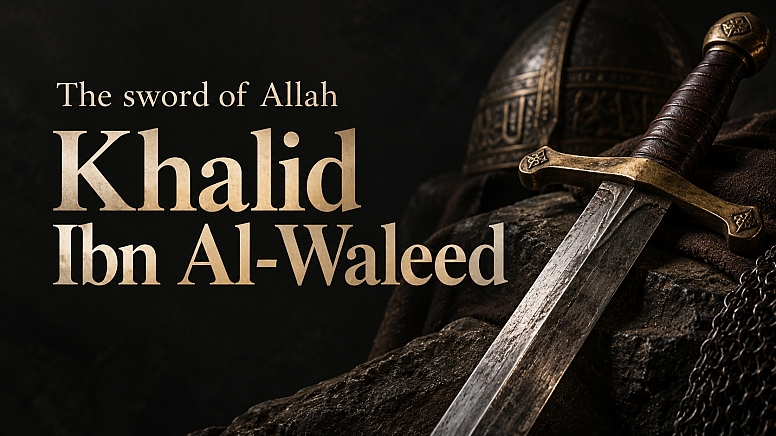
Khalid ibn al-Walid رضي الله عنه was one of the greatest companions of the Prophet Muhammad ﷺ and one of the most remarkable military commanders in Islamic history. He was from the Quraysh and belonged to the Banū Makhzūm, a clan known for producing skilled warriors. Before accepting Islam, Khalid fought against the Muslims at the Battle of Uhud. However, Allah ﷻ later guided him to Islam, and he became one of its greatest defenders.
The Prophet ﷺ gave Khalid رضي الله عنه the famous title “Sayfullah” (the Sword of Allah). He became known for his extraordinary courage, intelligence and ability to lead armies. Throughout his military career, he became famous for never suffering a defeat in battle. He fought in some of the most important campaigns of the early Muslim community and continued serving Islam during the caliphates of Abu Bakr رضي الله عنه and Umar رضي الله عنه.
What makes Khalid رضي الله عنه particularly inspiring, however, is not only his success on the battlefield. His life also teaches us about the responsibility of Da'wah (calling people towards Allah ﷻ).
After Khalid رضي الله عنه accepted Islam, he was sent by the Messenger of Allah ﷺ with a group towards the people of Banū Jadhīmah. His mission was not to fight them, but to invite them to Islam. Ibn Ishaq records that the Prophet ﷺ sent several groups around Makkah to call people to Allah, and Khalid رضي الله عنه was among those sent as a caller.
This is a beautiful reminder that Da'wah was not restricted to scholars or a special group of people. The Companions رضي الله عنهم understood that when Allah ﷻ blessed someone with knowledge of Islam, they should share that good with others.
Khalid رضي الله عنه himself was still relatively new to Islam when he was given this responsibility. He did not have to wait until he had become a famous scholar or spent decades studying. He was given what he knew, and he was expected to convey the message of Islam.
This teaches us an important lesson today: Da'wah is a responsibility upon every Muslim according to their ability and knowledge. Not every Muslim will stand before a crowd or give a lecture. Da'wah can be as simple as teaching someone a short du'a, explaining something you have learnt about Islam, encouraging someone towards salah, sharing a beneficial reminder, or simply showing the beautiful character that Islam teaches.
At the same time, Da'wah must be done with knowledge, wisdom and good manners. We should not speak about Islam without knowing what we are saying. Allah ﷻ says:
“Invite to the way of your Lord with wisdom and good instruction.” (Qur'an 16:125)
The story of Khalid ibn al-Walid رضي الله عنه therefore gives us more than the story of a fearless warrior. It shows us a Companion who, after finding Islam, was given a role in spreading its message. His life reminds us that every Muslim has something beneficial to share, even if it is only a small amount of knowledge.
Khalid رضي الله عنه may be remembered as the sword of Allah but his story also reminds us that the strength of a Muslim is not only shown on the battlefield. It is also shown in standing for the truth, learning the religion, practising it and helping others come closer to Allah ﷻ.
LEAVE A COMMENT
Categories
Recent Posts








0.0198