

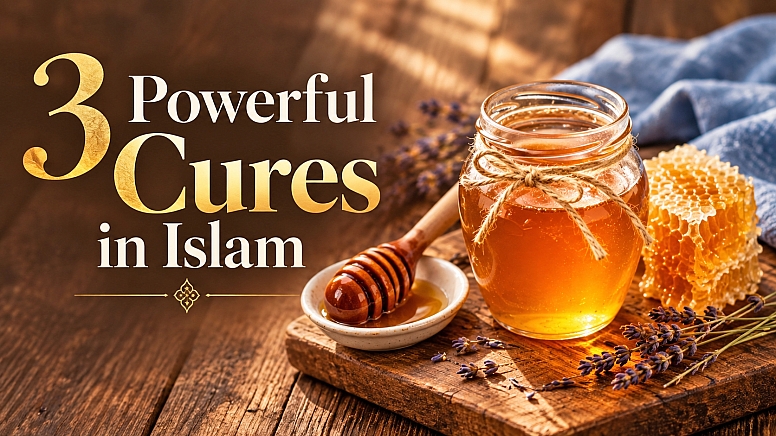
3 Powerful Cures in Islam: Hadith on Honey, Cupping, & Cauterization
Islam is a complete way of life, and it also teaches us about caring for our health. The Prophet Muhammad ﷺ taught his Companions رضي الله عنهم about different forms of treatment and encouraged them to seek beneficial remedies.
Among the treatments mentioned by the Prophet ﷺ are honey, cupping and cauterisation.
The Prophet ﷺ said:
“Healing is in three things: a gulp of honey, cupping, and branding with fire (cauterising). But I forbid my followers to use cauterisation.”
(Sahih al-Bukhari 5680)
1. Honey 🍯
Honey is mentioned in the Qur'an as something in which there is healing. Allah ﷻ says:
“There emerges from their bellies a drink, varying in colours, in which there is healing for people.”
(Qur'an 16:69)
The Prophet ﷺ also mentioned drinking honey as one of the remedies that may contain healing. This shows us the importance of appreciating the natural foods and remedies that Allah ﷻ has provided.
2. Wet Cupping — Hijama
Hijama, or wet cupping, is a traditional treatment in which cups are placed onto the skin to create suction, followed by small superficial incisions through which a small amount of blood is drawn.
Cupping was practised during the time of the Prophet ﷺ, and he ﷺ mentioned it as one of the three treatments.
Today, cupping is still used by people around the world, including professional athletes. British heavyweight boxer Anthony Joshua has publicly shared himself receiving cupping therapy as part of his recovery routine.
Olympic swimmer Michael Phelps also famously used cupping therapy. During the 2016 Rio Olympics, he was seen competing with the distinctive circular marks left by the cups, bringing widespread attention to the ancient practice.
It is important, however, not to confuse the fact that an athlete uses a treatment with proof that it will treat every illness. Muslims follow the Qur'an and Sunnah first, while medical treatment should also be approached responsibly and with qualified professional advice.
3. Cauterisation
The third treatment mentioned in the hadith is cauterisation, which involves using heat to burn or seal tissue.
Although the Prophet ﷺ mentioned it among the treatments, he also made it clear that he did not like cauterisation and prohibited his followers from using it.
Therefore, it should not be presented as a treatment that Muslims are simply encouraged to practise. The hadith teaches us that although it may have been a possible treatment for certain conditions, it was something the Prophet ﷺ discouraged.
A Reminder About Islamic Medicine
These teachings show us that Islam encourages Muslims to seek treatment rather than simply ignoring illness. The Prophet ﷺ taught his Ummah about beneficial remedies while also teaching us to place our trust in Allah ﷻ.
Honey, hijama and the mention of cauterisation in the Sunnah remind us that Islamic teachings contain guidance concerning many areas of life, including our health.
And perhaps one of the most interesting things is that hijama, a treatment mentioned by the Prophet ﷺ more than 1,400 years ago, is still being used today, even by world-class athletes such as Anthony Joshua and Michael Phelps.
Our ultimate belief, however, is that Allah ﷻ is Ash-Shāfī — The One who cures. Medicine may be a means, but healing ultimately comes from Him.
LEAVE A COMMENT
Categories
Recent Posts








0.0281